

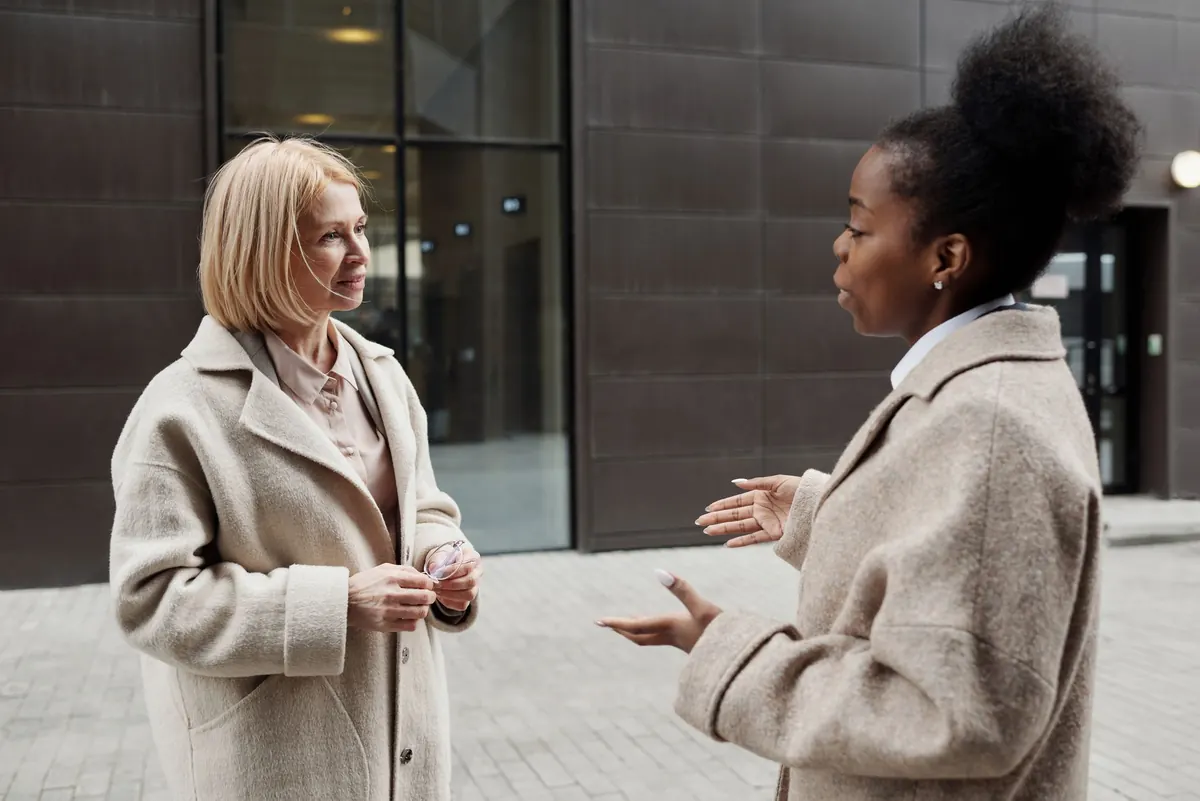
It can happen at a bus stop, over a garden fence, or in the queue at the till. Someone says the weather has been mad this year. Someone else says it is just Britain being Britain. Within thirty seconds, a harmless chat has turned into a small, prickly argument about politics, science and who is allowed to be annoyed.
It does not have to go that way. Talking about climate change inside ordinary weather conversation is a skill, and like most skills it is mostly about listening, timing and choosing your words with a bit of care. You are not trying to win a debate. You are trying to leave the other person still willing to talk to you.
Weather chat is a doorway, not a trap
British weather talk exists for a reason. It is a safe, shared subject that lets strangers acknowledge each other without demanding much. That is exactly what makes it useful for a bigger conversation, and exactly what makes it easy to wreck.
The first rule is that you do not have to use every chat as an opportunity. If you are tired, or the other person is clearly not in the mood, let it go. The second rule is to agree on the weather itself before you go anywhere near the causes. If it has been grey and drizzling for nine days, say so. Shared ground first, opinions later, if at all.
Lead with what you have both noticed
Compare these two openers. The first is: “You know that’s climate change, don’t you?” The second is: “The allotment’s like concrete. I’ve never watered this much in May.”
The first makes a person defensive before they have said anything. The second invites them to compare notes. One is a diagnosis; the other is an observation.
Observations work because they are about your own experience, which nobody can argue with. You are not claiming to have measured the planet. You are saying what you have seen with your own eyes: blossom arriving earlier than you remember, the lawn going brown in June, the winter coat staying in the cupboard until January. If the other person has noticed something similar, the conversation carries itself. If they have not, you have still had a normal chat about the garden.
Ask more than you tell
Questions do more work than statements, provided you actually want the answer. Useful ones include:
- “Have you noticed anything different where you are?”
- “How long have you lived here? Has it changed much?”
- “Do you reckon that flooding was normal for us, or not?”
- “What would have to happen for it to worry you?”
Then stop talking. Let there be a gap. If the answer is short, follow it with “tell me more about that” rather than your own counter-argument. People can tell the difference between a question and a trap, and they will close down the moment they sense the second one.
The four objections you will actually hear
Most resistance comes in a handful of familiar shapes. You do not need to have an answer for everything, and you should resist the urge to stack up evidence. Choose one point and leave it there.
“It’s just weather. It snowed in April.”
Cold snaps still happen in a warming climate; that is not a contradiction, and saying so calmly takes the sting out of it. There is an old saying worth borrowing: climate is what you expect, weather is what you get. A single cold week is weather. The long-run average is climate.
“They can’t forecast tomorrow, so how can they forecast 2050?”
This one is genuinely reasonable, and worth treating as such. A forecast is a prediction about a specific day; a climate projection is a range of likely outcomes over decades. They are different jobs, done with different tools. Agree that uncertainty is real, then note that uncertainty cuts both ways — it is not a reason to assume the safest outcome.
“Britain is tiny. Nothing we do matters.”
This is usually about fairness rather than physics. You can acknowledge the frustration — it is annoying to feel that your effort is small — without pretending the point is about the UK’s share of global emissions alone.
“It’s just an excuse to tax us.”
If the conversation turns to your own flood risk, insurance or property, that is a question for your insurer or the Environment Agency’s flood maps, not for a neighbour’s opinion or a chat over the fence. Keep the weather chat separate from the money chat.
Words that keep the temperature down
Small choices in language make a large difference. Avoid labels — “denier”, “sheep”, “doomster” — because they end conversations rather than advance them. Anything beginning “obviously” or “everyone knows” invites a fight.
Use “I” rather than “you”. “I find the summers harder than they used to be” is much easier to hear than “you’re burying your head in the sand”. Swap “but” for “and” where you can: “cold winters still happen, and the overall trend is warmer” sounds like an addition rather than a rebuttal.
It also helps to admit the limits of your own knowledge. “I’m not a scientist, but this is what I’ve read” is honest, and it models the behaviour you are hoping for. If you do not know something, say so, and offer to look it up later.
Know when to stop, and how to stop well
Watch for the signs: voices rising, the same point going round for the third time, someone scoring points rather than thinking. When you spot them, stop. Not with a flourish, just stop.
Have an exit line ready. Something like: “Fair enough — I see it differently, but I’m glad we talked about it.” Then go back to the weather, or the football, or the price of a pint of milk. Leaving a conversation warm matters more than leaving it won. People rarely change their minds mid-argument; they sometimes change them years later, quietly, because of someone they liked who never lectured them.
Your next conversation
Pick one person you see regularly — a neighbour, a colleague, a relative — and one thing you have genuinely noticed about the weather where you live. Mention it the next time you speak. Ask one open question. Listen to the answer without preparing your reply.
That is the whole method. No statistics to memorise, no script to follow, no argument to win. Do it a few times and the topic stops being radioactive. The weather, after all, is something you both already share.
Photo: August de Richelieu / Pexels